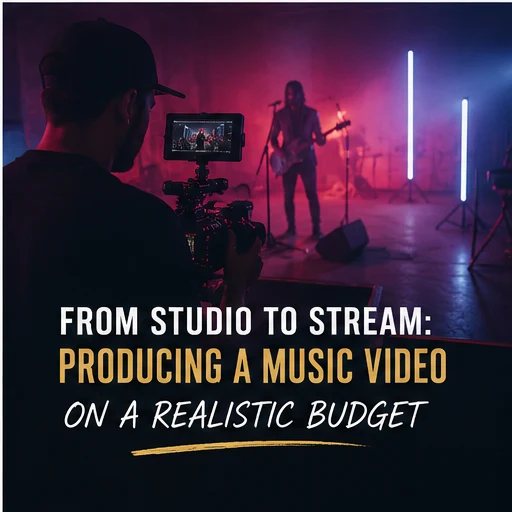
From Studio to Stream: Producing a Music Video on a Realistic Budget
You do not need a blockbuster budget to make a music video that matches the record. Here is how we scope treatments that actually get made.
The biggest budget killer in music video production is a treatment written before anyone has listened closely to the track. A visual concept that ignores the song’s actual structure — its drops, its quiet verses, its runtime — almost always balloons in scope once it meets a shot list and a call sheet.
We start every music video with a track breakdown before a single visual idea gets pitched: where the hooks land, where the energy dips, how long the whole thing actually runs. A concept built on top of that structure tends to need fewer locations and fewer setups, because the song itself is already doing a lot of the storytelling work.
On-set playback is non-negotiable for anything performance-based. Syncing audio playback to camera on set means every take is frame-accurate to the final mix, which saves enormous time in the edit — no guessing whether a lip-sync take actually lands on the beat six months later when the final master changes slightly.
Budget discipline also means being honest about what a narrative concept actually needs versus what looks good in a pitch deck. A single well-lit location with a strong performance often reads stronger on a small budget than a multi-location narrative shot in a rush. We would rather scope a treatment a client can fully execute than one that gets half-shot when the budget runs out.
The edit is where the track and the footage finally meet properly — cutting directly against the multitrack audio, not a rough reference mix, so every cut actually lands on the beat it was designed for. A video edited this way holds up on repeat viewing in a way a rushed cut to a scratch track never quite does.