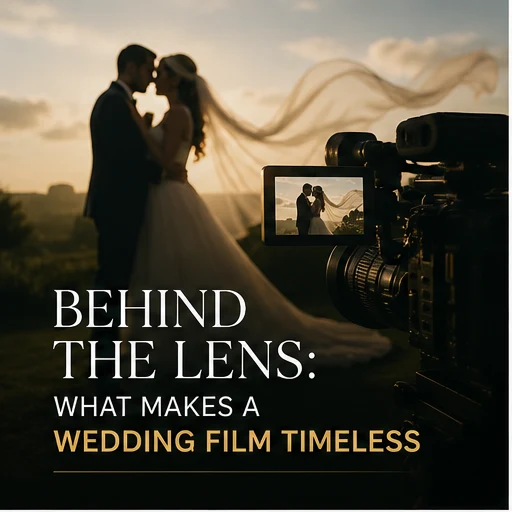
Behind the Lens: What Makes a Wedding Film Timeless
A look at how we approach coverage, light, and pacing to make wedding films worth rewatching for years.
Most wedding films age badly for the same reason: they chase trends instead of the day itself. A transition that felt fresh in a showreel two years ago now reads as a timestamp. The films that hold up are the ones built around the couple and the room, not around whatever editing style is trending that season.
That starts with coverage, not editing. A small, discreet team shooting with long lenses catches reactions nobody staged for the camera — the flicker of nerves before the vows, the exact moment a parent stops holding it together. Those frames are what a couple actually wants to see again in ten years, far more than a drone shot everyone else has too.
Light is the second piece, and it is mostly about restraint. We expose for skin and let backgrounds fall where they fall, rather than over-lighting a room to make it look like something it is not. A wedding venue photographed honestly, in the light it actually had that evening, reads as a memory. One flooded with artificial fill reads as a set.
Pacing is where most films lose the plot — literally. We treat the ceremony, the in-between hours, and the reception as three different rhythms rather than compressing everything into the same highlight-reel tempo. The quiet stretch where nothing dramatic happens is often the part a couple watches most closely a few years later, because it is the part real life actually looked like.
None of this requires exotic gear. It requires a crew willing to stay small, move carefully, and resist the urge to manufacture drama that was not there. That is the whole craft, repeated on every wedding we shoot.